Home Security System
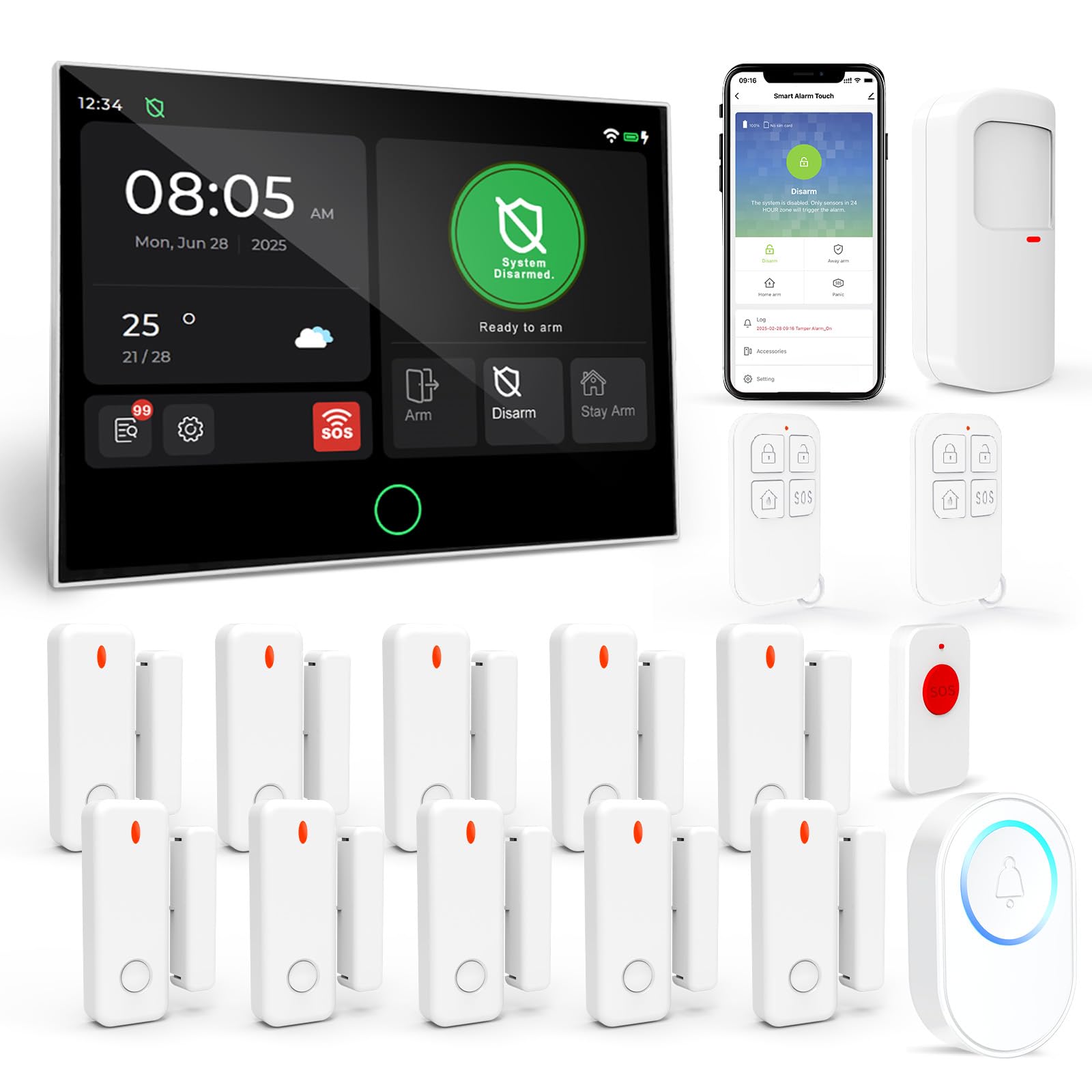
Home Security System – Key Technical Specifications
- Display – 7-inch full-touch TFT screen with HD resolution and a graphical menu
- Connectivity – 2.4 GHz Wi‑Fi and 4G cellular; 5 GHz Wi‑Fi is not supported
- Wireless transmission – FSK technology with a stated range of up to 200 meters
- Backup battery – 5,000 mAh lithium-ion battery
- Alarm siren – 120 dB
- Notifications – App push notifications, SMS alerts, and 4G voice alarms
- Control options – Tuya Smart App, Alexa, and Google Assistant compatibility
- System capacity – Up to 100 wireless zones, 10 remote controls, and 10 RF cards
- Zone naming – Custom names supported for the first 40 sub-devices
- Updates – OTA remote updates
- Included components – 1 control panel, 1 motion sensor, 10 door/window contact sensors, 2 remote controls, 1 doorbell button, and 1 SOS button
- Mounting – Wall-mount installation with included screws
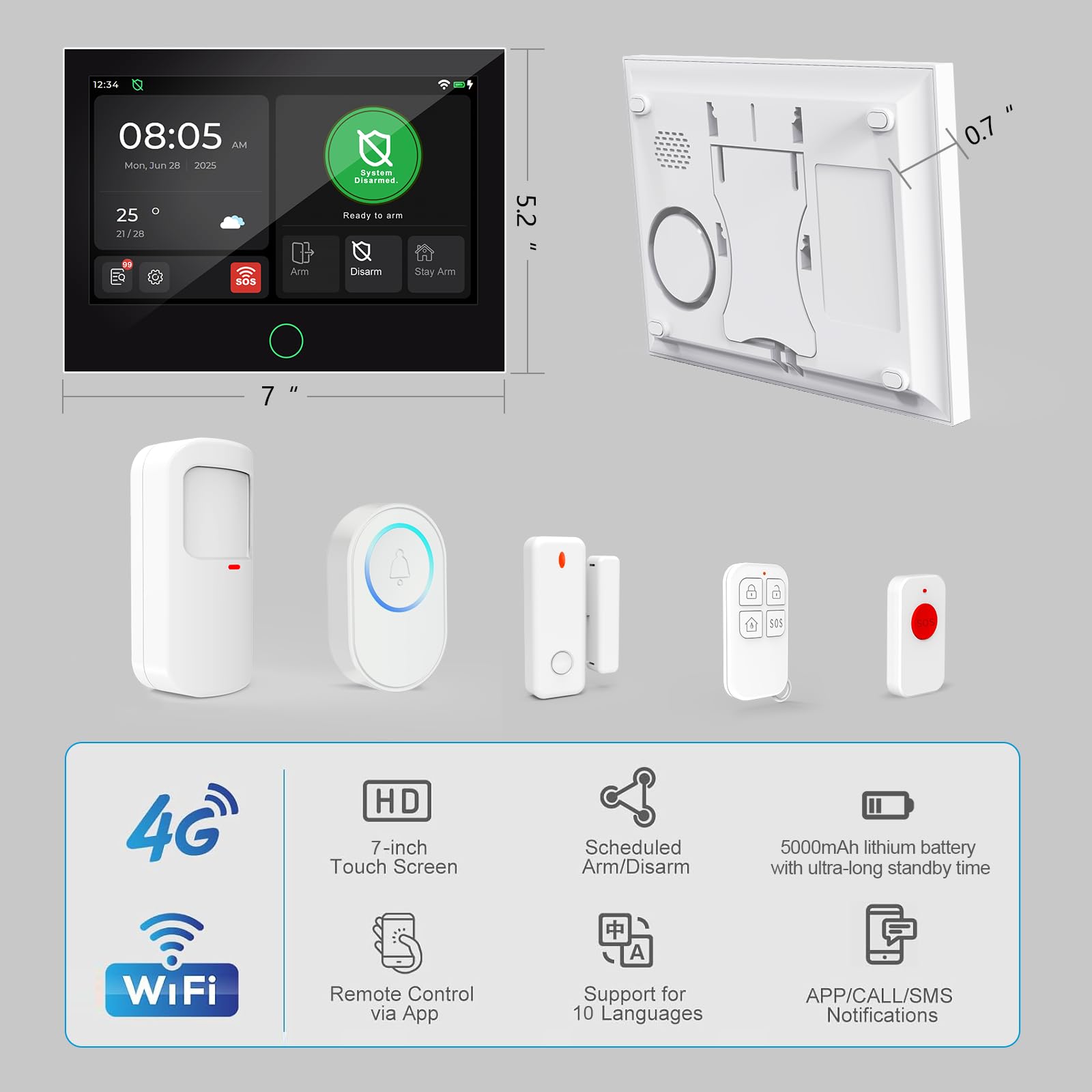
## DEEPVIGLX Home Security System: A More Approachable Take on DIY Protection
Home security gear has a habit of making simple things feel like a trip to the control room. The DEEPVIGLX Home Security System takes a friendlier approach: its central touchscreen gives the system a familiar, easy-to-navigate face, while the included sensors and controls are designed to cover the everyday entry points around a home.
The appeal is convenience without a monthly monitoring bill. The system can send alerts through its app and cellular connection, and it works with Alexa and Google Assistant for hands-free control. That combination makes it a natural fit for people who want to check in, arm the alarm, or respond to an alert from their phone rather than trek to a wall keypad. As with any connected home device, the experience will depend on your network and how comfortably you use the companion app.
For renters, homeowners, or anyone setting up a small office, the kit’s ready-to-use approach is a plus. It arrives with a collection of sensors and controls, and the system can be expanded as needs change. Wall mounting is meant to be simpler, though it’s still worth planning sensor placement before installation so doors, windows, and movement paths are covered sensibly.
There’s also a reassuring emphasis on backup and emergency use. The alarm can notify you in several ways, and the included panic options offer a quick way to trigger an alert. That’s useful flexibility, but no DIY alarm should be mistaken for a guarantee of emergency response: notifications are only helpful if they reach someone who can act on them.
At **$132.34**, the DEEPVIGLX Home Security System presents a lot of everyday functionality in one package, especially for shoppers seeking app-based home security with voice-assistant support and room to expand. Its best selling point is that it aims to make protection feel manageable rather than intimidating. Before buying, check that your home’s Wi-Fi setup and preferred smart-home routines are compatible—and decide whether self-monitoring is the right fit for your household.
Pros
- A generous starter bundle—including door and window sensors, a motion sensor, remote controls, and SOS buttons—helps cover common home entry points right away.
- Wi‑Fi and 4G connectivity offer more than one route for alerts, while app notifications, SMS, and voice alarms provide useful notification options.
- The 7-inch touchscreen and graphical menu make the control panel easier to navigate than a system relying only on buttons.
- Alexa and Google Assistant compatibility adds convenient hands-free control, alongside the Tuya Smart App.
- Room to add up to 100 wireless zones gives the home alarm system flexibility to grow, and OTA updates can simplify software maintenance.
- A 5,000 mAh backup battery and 120 dB siren add resilience and a strong audible deterrent.
Cons
- Support for 2.4 GHz Wi‑Fi only may be limiting in homes configured around 5 GHz networks, so check router compatibility before buying.
- The stated wireless range of up to 200 meters may vary with walls, interference, and placement, making sensor positioning important.
- Custom names are available for only the first 40 sub-devices, which could make a larger security setup less intuitive to manage.
- Wall-mount installation is less flexible than a freestanding panel, and requires choosing a suitable location near power and network coverage.